
Wiring Repair in the USA
Wiring problems often start from age, rodent damage, or overloaded runs that overheat the copper. Our technicians trace the path from the panel to the affected outlets or fixtures and test voltage drop along the way. They measure resistance at connections to find loose or corroded spots before any repair begins.
Homeowners first turn off the breaker for the circuit and avoid using outlets that spark or feel warm. Simple Electric crews then arrive to open junction boxes and inspect insulation condition. They decide whether a splice, full segment replacement, or new run is needed based on wire gauge and load requirements. Wiring repair requests reach Simple Electric from USA locations and show up on the homepage.
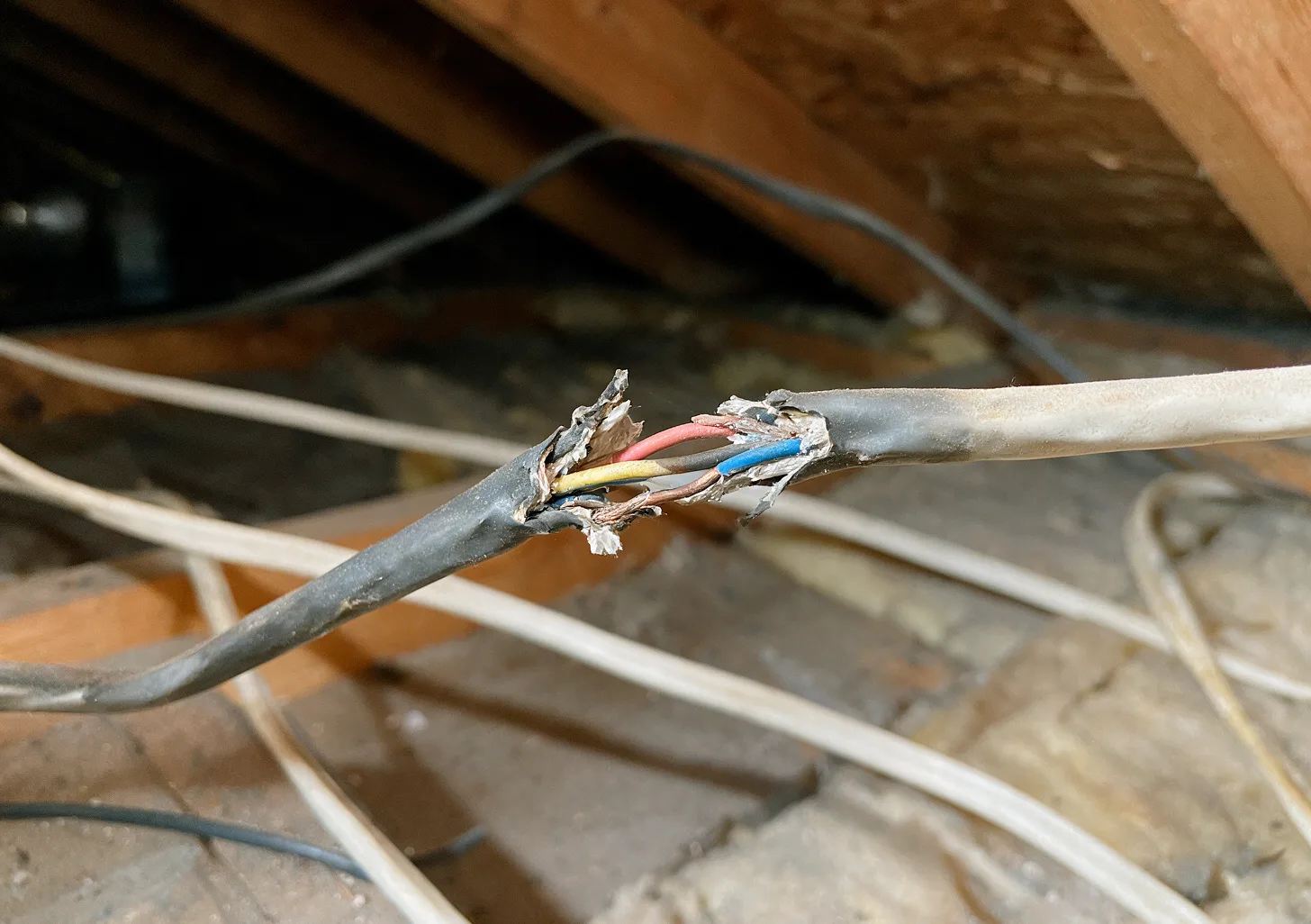
Warning signs of wiring trouble
- Lights dim or flicker when appliances start
- Outlets feel warm or show burn marks nearby
- Breakers trip often without obvious overload
- Burning plastic smell near walls or ceilings
- Sparks appear when plugging in devices
Common causes behind wiring faults
Old cloth or rubber insulation cracks over decades and exposes conductors. Rodents chew through sheathing in attics or crawl spaces and create intermittent shorts. Moisture from leaks can corrode terminals and raise resistance until heat builds at the joint.
Adding large appliances without new circuits forces existing wires past their amp rating. This stretches the copper and loosens terminations at receptacles. Simple Electric crews note the original wire size and calculate whether the run can support the present load.
Checks performed on site
Technicians start at the panel and verify that the correct breaker size matches the wire gauge. They use a multimeter to read voltage at the outlet under load and compare it to the panel reading. A drop over three percent points to high resistance somewhere along the path.
They open boxes and look for melted insulation, green corrosion on terminals, and loose wire nuts. Infrared thermography shows hot spots at hidden junctions before walls are opened. Continuity tests confirm each conductor reaches the intended point without breaks.
Repair choices and materials used
For localized damage a copper splice with crimp connectors and heat shrink restores the run. When insulation is brittle throughout a section the full length is replaced with new Romex or THHN in conduit. All new wire matches or exceeds the original ampacity rating.
Junction boxes are replaced if they are cracked or undersized. Grounding pigtails are added where missing. Simple Electric uses only copper conductors for branch circuits and torque terminals to manufacturer specifications to prevent future loosening.
What to do while waiting for help
Switch off the breaker that controls the problem area and leave it off. Unplug everything on that circuit so no current flows through damaged wire. Note which lights or outlets stopped working to help the crew map the run quickly.
Do not attempt to tape exposed wire or move conductors yourself. Keep children and pets away from the area. Simple Electric technicians will confirm power is isolated before beginning any work inside the walls.
Wiring Repair questions
How do you find hidden wiring damage?
Technicians test voltage and resistance at multiple points along the circuit. They use non-contact voltage detectors and thermal cameras to locate heat from high resistance without opening every wall. Once the fault area is isolated they open the nearest accessible box to confirm the condition.
Can damaged wiring be spliced or must it be replaced?
A short section with good insulation on both sides can be spliced using listed connectors inside a junction box. When insulation is brittle or the wire has been overheated for a long distance the entire run is replaced to meet current code standards for conductor size and support.
What wire type is used for most home repairs?
Solid copper 12 AWG or 10 AWG Romex with ground is standard for 20 amp and 30 amp circuits. In exposed locations or where physical protection is required THHN conductors are pulled in EMT or PVC conduit. Aluminum wiring receives special connectors and antioxidant compound.
Will the repair affect other circuits in the house?
Only the affected circuit is isolated at the panel before work starts. Adjacent circuits remain live unless they share a neutral or the panel requires shutdown for safe access. Simple Electric crews label every wire before disconnection so power returns exactly as found.
Schedule Wiring Repair
Tell us which outlets or lights are affected so our technicians can prepare the right tools and materials.