
EV Charger Installation in the USA
Our technicians arrive and first open the main panel to count available breaker spaces and measure the total amperage load already in use. They calculate how much headroom remains before adding the new 240 volt circuit that an EV charger requires. If the panel lacks space or capacity they note the exact upgrade needed to handle continuous 40 or 50 amp draw without nuisance trips.
Next they walk the planned route from the panel to the garage or parking spot and check for existing conduit or open wall cavities. They measure distances so the correct length and gauge of wire can be ordered. Homeowners can safely clear the path and note the location of any water pipes or gas lines before the crew starts. People across the USA ask Simple Electric about ev charger installation shown on the homepage at home.
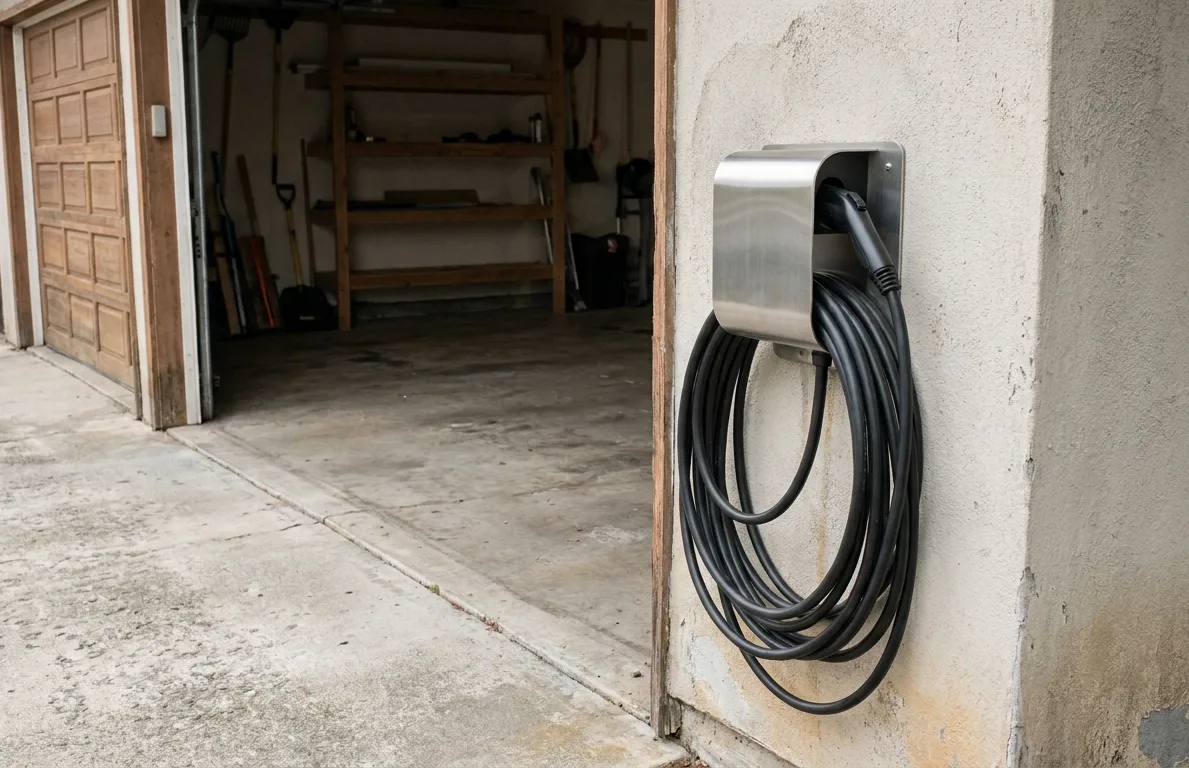
Warning Signs You Need EV Charger Installation
- Existing 120 volt outlet takes all night to add only a few miles of range
- Lights dim or breakers trip when the dryer and car charger run together
- No 240 volt outlet near the parking spot for any level two unit
- Panel label shows every breaker space already occupied
- Vehicle manual calls for a dedicated circuit larger than 30 amps
Panel Assessment Before EV Charger Installation
Technicians use a clamp meter on the main lugs to record actual running load during peak hours. They compare that number against the panel rating and apply the 125 percent continuous load rule required for EV chargers. This step shows whether the service can support the new circuit or if conductors and the main breaker must be changed first.
They also verify the grounding electrode system and bond the new circuit properly. Any aluminum feeders are examined for proper termination hardware because loose connections overheat under sustained EV charger current.
Circuit and Wiring Choices for EV Charger Installation
Most homes receive number six copper wire inside three quarter inch conduit for a 50 amp circuit. The wire runs in a straight path with the fewest bends possible to reduce voltage drop. A double pole breaker of the correct amperage is placed in the panel and the neutral is not used unless the charger model requires it.
The final connection uses a listed EV charger receptacle or hard wired whip depending on local preference. A GFCI breaker protects the run because the charger sits outdoors or in a damp garage. Technicians torque every terminal to manufacturer specifications and label the new breaker clearly.
Mounting and Final Connection Steps
The charger bracket is fastened to wall studs with lag screws or to a poured concrete pad with expansion anchors. Height is set so the connector reaches the vehicle port without strain. Our technicians pull the wire, make up the terminations inside the charger, and test insulation resistance before energizing.
They then plug in a test load or the actual vehicle and monitor voltage under full draw. Any deviation outside five percent prompts an immediate recheck of connections and wire size.
What Homeowners Can Prepare Ahead of Time
Clear the wall area where the charger will mount and move any storage bins that block panel access. Note the year and amperage rating on the main breaker label so the technician can reference it quickly. Turn off any large appliances during the visit so load measurements are accurate.
Have the vehicle manual or charger specifications ready. This lets the crew confirm the exact amperage and connector type before the wire is cut.
EV Charger Installation questions
How long does EV Charger Installation take?
Most single circuit installs wrap up in one visit once the panel is opened and the route is confirmed. Time stretches only when an upgrade to the main panel or service entrance conductors is required first.
What size wire is used for a typical home EV charger?
Number six copper is standard for a 50 amp continuous load. Larger wire or parallel runs appear only when the distance from panel to charger exceeds manufacturer limits for voltage drop.
Can an existing 240 volt outlet be reused?
Only if the outlet is on a dedicated circuit with the correct breaker size and wire gauge and is listed for EV use. Most older dryer outlets lack the required protection and must be replaced with a new hardwired or receptacle installation.
Does the charger need its own breaker?
Yes. The circuit must be dedicated and protected by a double pole breaker sized to the charger rating. Sharing the circuit with other loads violates code and risks overheating under continuous draw.
Schedule EV Charger Installation
Call Simple Electric to have technicians measure your panel and install the right circuit for your electric vehicle.