
Recessed Lighting in the USA
Our technicians start by turning off power at the main panel before any recessed lighting work. They remove the trim and bulb to look inside the can for scorch marks on the socket or wiring. Next they check the ceiling depth and whether insulation sits against the housing, since non IC rated cans need an air gap to avoid heat buildup.
Homeowners can safely replace bulbs and test the switch before calling. If the circuit trips or the light stays dim after a new bulb, leave the breaker off and avoid touching the fixture. Simple Electric then measures the opening size and maps the joist spacing to choose the right can style for the space. You will see Simple Electric crews doing recessed lighting that the homepage describes for USA areas.
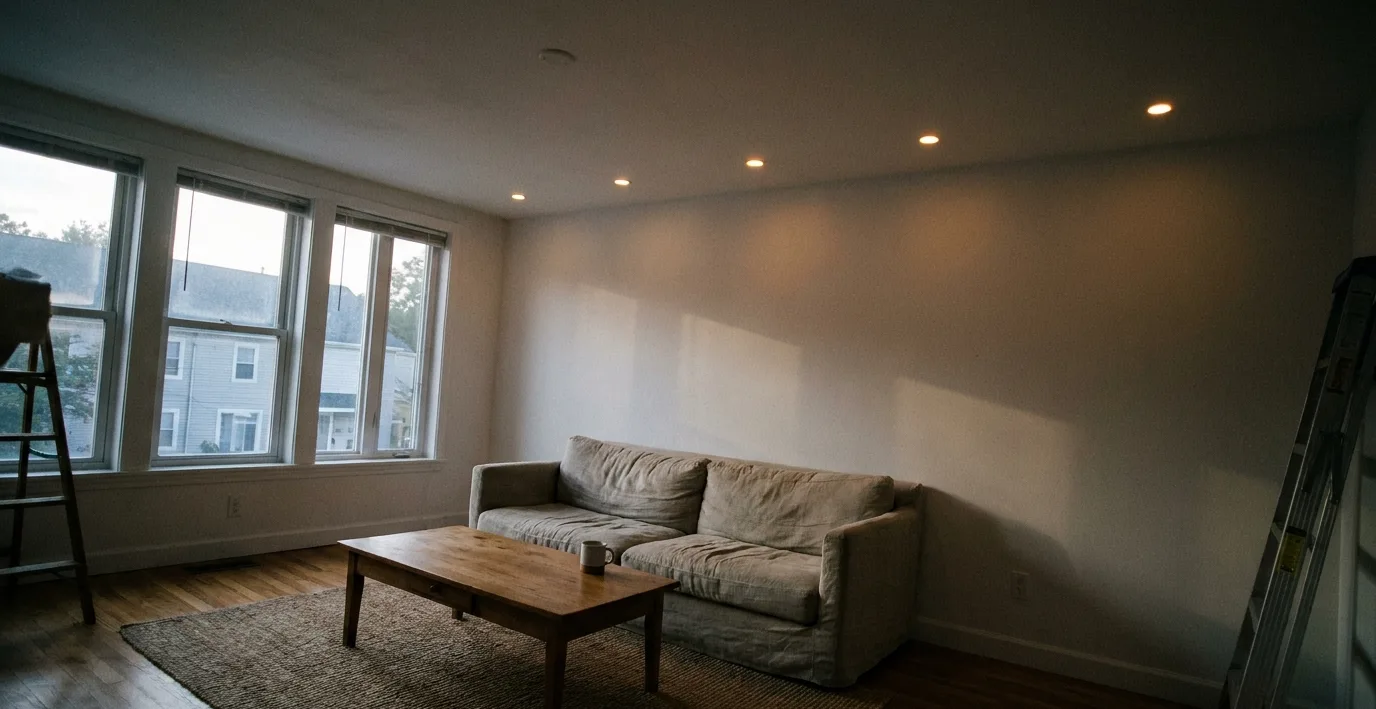
Warning Signs With Recessed Lights
- Fixture feels warm to touch after running for ten minutes.
- Trim ring sits crooked or pulls away from the ceiling surface.
- Bulb blows out within days even after swapping to a new one.
- Dimmer switch buzzes or the light flickers at low settings.
- Ceiling around the opening shows brown rings or small cracks.
What Technicians Inspect On Site
Technicians first verify the breaker rating and trace the circuit to confirm no shared loads exceed its capacity. They measure the can diameter and depth against joist spacing to see if a remodel or new construction housing fits without cutting extra lumber. They also test voltage at the fixture and check ground continuity with a meter before any new wiring is added.
Next they determine if the existing insulation touches the can and whether an IC rated unit is required. They note the type of ceiling material and any vapor barrier so the new install maintains proper fire and air sealing. All measurements get recorded so the correct parts are ordered on the first visit.
Common Causes During Install Or Repair
Loose push in connectors inside the junction box often cause flickering after a few years of expansion from heat. Undersized wire that was run for a single fixture now shares the circuit with other lights and trips the breaker under load. Missing or damaged thermal protection inside older cans lets the unit overheat and shut off at random times.
Homeowners sometimes stuff insulation against a non IC can, trapping heat and shortening bulb life. Joist spacing that does not match standard can sizes forces an offset install that can pinch the cable. Simple Electric replaces the entire assembly with the right housing and rated cable to correct these issues.
Materials And Parts Used
We carry IC rated airtight cans in six inch and four inch sizes along with remodel clips that grip drywall without extra framing. LED modules with integrated drivers replace older incandescent sockets and run cooler against insulation. Solid copper twelve gauge cable connects the new can to the nearest junction box while maintaining proper box fill.
Trim options include baffle, reflector, and wall wash styles in black or white finishes. Gaskets seal the trim to the ceiling to limit air leakage. All parts meet current energy codes for the region where the home sits.
Steps Homeowners Take First
Switch off the breaker that feeds the recessed light and use a voltage tester to confirm power is gone. Remove the bulb and trim to look for melted plastic or loose wires inside the can. Note the exact size of the ceiling opening and whether the light is controlled by a dimmer or standard switch.
List any other lights or outlets that lose power on the same breaker. Keep the area clear so tools and a ladder fit safely. Simple Electric then arrives with the measured parts and finishes the job without extra trips.
Recessed Lighting questions
How deep does the ceiling need to be for recessed lighting?
Most six inch cans need at least seven inches from drywall surface to the top plate. Four inch cans fit in tighter spaces around five inches deep. Our technicians measure joist depth and insulation thickness during the visit to pick the correct housing.
Can recessed lights go in an insulated ceiling?
Only IC rated cans are safe when insulation will touch the sides. Non IC units require a three inch clearance. Simple Electric checks the insulation type and installs the proper rated can so heat does not build up.
What size opening is needed in the drywall?
Standard six inch remodel cans cut a hole roughly six and a half inches across. Four inch units need about four and a half inches. Technicians trace the template on the ceiling before cutting to keep edges clean.
Do dimmers work with all recessed fixtures?
Only LED modules labeled dimmable pair with modern dimmers. Older incandescent cans may need a new driver or module. We test the existing switch type and replace parts so the lights dim smoothly without buzzing.
Recessed Lighting Across The USA
Call Simple Electric when your recessed lights show heat, flicker, or need new cans installed.