
Breaker Replacement in the USA
Breaker Replacement addresses panels where a switch no longer trips or resets properly. Our technicians first shut off the main power, remove the dead front, and examine the bus bars for damage before any part is touched. They measure voltage on each leg and check for heat marks that show where current flow became unstable. This work restores protection against overloads without replacing the entire panel.
Homeowners notice repeated trips on one circuit or a breaker that stays warm after normal use. Simple Electric brings the correct breaker type, whether single-pole, double-pole, or combination arc-fault, and installs it in the same slot. The old breaker is removed, the new one is seated firmly, and power is restored only after torque checks on the terminals. Simple Electric works on breaker replacement projects the homepage covers for any USA homeowner needing help.
Warning Signs of Breaker Problems
- A breaker trips several times a day even when only lights and a few small devices run on the circuit.
- The breaker handle feels loose or fails to snap back into the on position after being reset once.
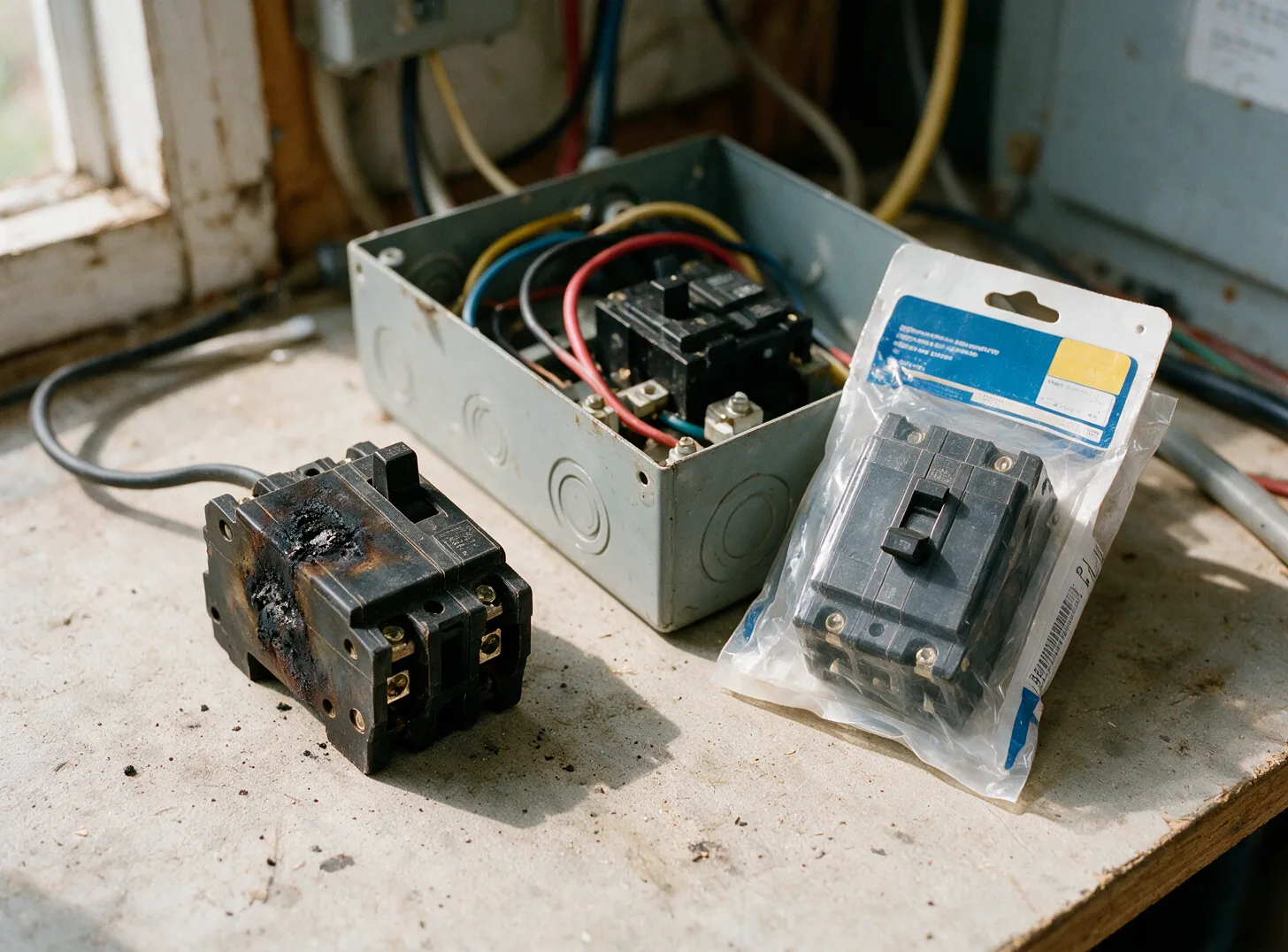
- Burn marks or a melted plastic edge appear along the side of the breaker where it meets the bus bar.
- A faint burning odor comes from the panel when several appliances operate at the same time.
- Lights dim briefly whenever the refrigerator or microwave starts, pointing to an internal breaker fault.
Common Reasons a Breaker Stops Working
Breakers wear out from repeated overloads or from age-related loss of spring tension inside the mechanism. When a motor draws more current than the breaker rating during startup, the trip bar bends and eventually stays bent. Our technicians note the amperage rating printed on the old breaker and compare it to the wire size connected to that terminal.
Short circuits inside an appliance can weld the contacts closed so the breaker no longer opens. Corrosion on the bus bar from humidity also raises resistance and creates heat that weakens the breaker over time. Simple Electric replaces the unit with an identical model from the same manufacturer to keep the listing of the panel intact.
Loose terminal screws allow arcing that pits the contact surfaces. The breaker then trips at lower loads than its label states. Technicians tighten every screw to the torque value marked on the breaker before restoring power.
What Technicians Measure on Site
Technicians begin by reading voltage between each hot leg and neutral with the main breaker on. They then turn the main off and use a continuity tester across the suspect breaker to confirm the contacts are open. Amperage is measured on the wire while the circuit is under load to see whether the breaker trips below its rating.
Infrared thermography shows hot spots on the bus bar or on adjacent breakers that indicate shared overheating. Each wire is checked for proper gauge relative to the breaker size. Simple Electric records these readings on a panel diagram so the homeowner receives a clear picture of the panel condition.
Ground fault and arc fault test buttons are pressed on any combination breakers to verify they still function. If the test fails, the breaker is marked for immediate replacement regardless of visible damage.
Replacement Parts and Installation Steps
Simple Electric carries single-pole, double-pole, and tandem breakers in common ratings from 15 to 60 amps. They also stock arc-fault and ground-fault breakers when the circuit requires them. The new breaker must match the panel brand so the stab fits the bus bar without gaps.
After the main is turned off, the dead front is removed and the wire is loosened from the old breaker. The breaker is pried out, the terminal is inspected for melting, and the new breaker is pressed into place until it seats fully. The wire is reconnected and torqued before the cover is replaced.
Power is restored one breaker at a time while the technician watches for any new heat or trips. The homeowner is shown which circuits are protected by the new breaker and how to reset it safely.
What Homeowners Can Do Before Arrival
Note which outlets or lights lose power when the breaker trips and list any large appliances on that circuit. Keep the area around the panel clear so the cover can be removed without moving furniture. Avoid resetting the breaker more than once if it trips again immediately.
Turn off any devices on the affected circuit and leave them off until the technician arrives. If a burning smell is present, shut off the main breaker only if comfortable doing so and wait outside until help reaches the property.
Have the panel brand name and the ratings of nearby breakers ready. This information helps the technician select the correct replacement part before the truck arrives.
Breaker Replacement questions
Why does one breaker trip but others stay on?
That breaker protects a single circuit that carries more current than its rating allows. Overloaded outlets, a failing appliance motor, or a short inside the wiring can cause the internal trip mechanism to activate while the rest of the panel remains unaffected.
Can a homeowner replace a breaker themselves?
Simple Electric recommends against it because the main must be turned off and torque values must be followed exactly. Incorrect installation can leave the bus bar damaged or create a fire hazard from loose connections.
What if the new breaker trips right away?
The circuit still has an overload or short downstream. Our technicians test each outlet and appliance on that line with a plug-in tester to locate the source before any further breaker work is done.
How long does Breaker Replacement take?
Most single-breaker jobs are finished in under an hour once the panel cover is off. Double-pole or arc-fault breakers may require an extra few minutes to confirm proper function with the test button.
Book Breaker Replacement
Simple Electric can inspect the panel and complete Breaker Replacement during one visit across the USA.