
Electrical Panel Upgrades in the USA
Simple Electric sends technicians to homes when the main electrical panel shows it can no longer handle the load. They measure the amperage rating on the existing panel and check how many breakers are already in use. If new appliances or an electric vehicle charger have been added, the old panel may overheat or trip often. The technicians note the wire sizes feeding the panel and look for signs of corrosion on the lugs. They then explain whether adding a subpanel or replacing the whole box makes more sense for the home.
Our technicians bring a new panel rated at two hundred amps when the current one is rated at one hundred amps or less. They shut off the main power at the meter before removing the old box. New copper feeders are run from the meter base to the fresh panel. Each circuit is moved over one at a time and tested for proper torque on the terminals. The old panel is taken away once everything is transferred and the new breakers are labeled. Across the USA our team manages electrical panel upgrades tasks that Simple Electric shows on the homepage.
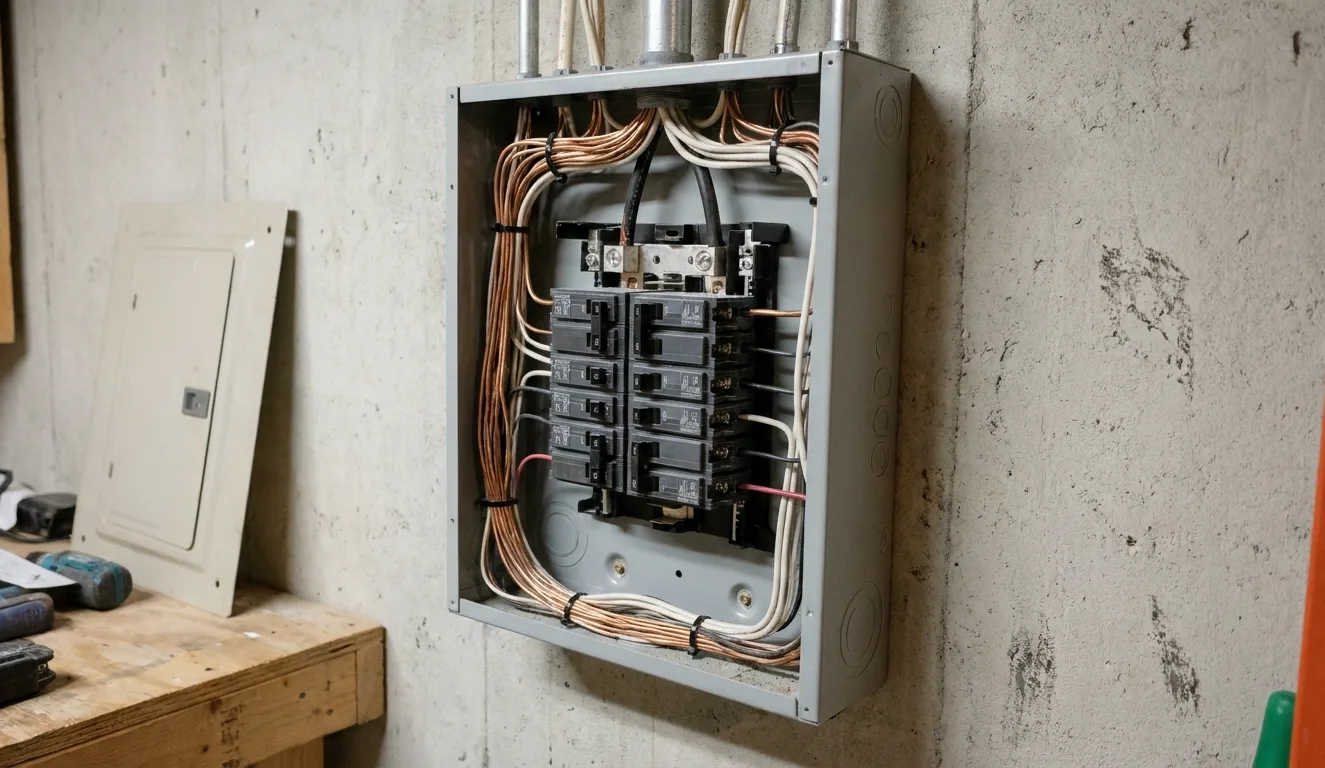
Warning Signs Your Panel Needs Attention
- Breakers trip repeatedly when running two appliances together.
- Lights flicker or dim when the air conditioner starts.
- The panel cover feels warm or shows brown marks near breakers.
- A burning plastic smell comes from the electrical panel area.
- Only fuses or very old style breakers are still in the box.
What Technicians Measure During an Inspection
Technicians first read the amperage printed on the main breaker and compare it to the size of the service entrance wires. They use a clamp meter to see how much current each leg carries under normal load. Loose connections on the bus bars are tightened only after power is off. Grounding and bonding wires are traced to confirm they reach the rod or water pipe. Any aluminum wiring is noted so the correct connectors can be chosen later.
The age and brand of the panel are recorded because some older models have known breaker issues. Technicians open every breaker and look for pitting or melting on the contacts. They also check that the panel is properly bonded to the neutral bar if required by code. Photos are taken of the interior before any work begins so the homeowner can see the condition.
Upgrade Choices and Parts Used
A full panel replacement uses a new three-quarter inch or one inch breaker style box with a higher main breaker rating. Copper bus bars replace any aluminum ones inside the new enclosure. Each circuit receives a fresh breaker of the correct amperage and type. AFCI or GFCI breakers are installed where the room requires them. The new panel door is labeled clearly for every circuit.
When the meter base is in good shape a subpanel can be added instead. Four wire feeder cable runs from the existing panel to the new subpanel location. The subpanel gets its own main breaker so future work stays isolated. All new parts are standard NEMA rated devices stocked on the truck.
Steps Homeowners Can Take First
Write down which breakers trip and what devices were running at the time. Count how many double pole breakers are already installed. Check the area around the panel for water stains on the wall or ceiling above it. Make sure the path to the panel is clear so the technician can work safely. Avoid resetting breakers more than once if they trip again right away.
Turn off any large loads like the dryer or oven before the appointment. Have the age of the house or last known panel work ready if asked. These details help the technician plan which size panel to bring.
How Power Is Restored After the Work
Once all circuits are moved the technician turns the main breaker on and tests voltage at several outlets. Each new breaker is switched on one by one while watching for any unusual sounds or smells. The meter is checked to confirm it spins correctly under load. The old panel and any removed wire are hauled away when the job is done.
The homeowner is shown the new labels inside the door and told which breaker controls which area. A final walk through confirms every light and outlet that was working before still works. The job is complete when the panel cover is secured and the area is clean.
Electrical Panel Upgrades questions
How long does an electrical panel upgrade usually take?
Most homes need four to six hours from the time power is shut off until everything is back on. The exact time depends on how many circuits must be moved and whether the meter base also needs work. Technicians finish one job before starting the next.
Can I add more circuits without replacing the whole panel?
A subpanel can sometimes be added if the main panel still has physical space and the service wires are large enough. The technician measures the existing load to decide. When space or capacity is lacking a full replacement is the safer route.
What size panel will be installed?
Two hundred amp panels are the most common upgrade from older one hundred amp boxes. The choice is based on the measured load, the size of the house, and any large appliances planned for the future. The technician explains the reason for the chosen size before work begins.
Will the power be off the entire time?
Power stays off from the moment the main breaker is opened until the last circuit is tested and restored. Most of the time is spent moving wires and mounting the new box while the power remains off at the meter.
Schedule Electrical Panel Upgrades
Call Simple Electric when your panel shows the warning signs listed above.