
Outlet Installation in the USA
Simple Electric sends technicians to handle Outlet Installation in homes across the USA. They trace the circuit back to the panel, check wire size and condition, and decide whether to add a new run or upgrade the existing box and connections. Homeowners notice missing outlets in work areas or rooms where devices must share one location, which often leads to extension cord use.
During the visit technicians measure voltage at the panel and at the outlet location, confirm the neutral and ground paths, and select the correct amperage rating for the circuit load. They install tamper resistant receptacles in living spaces and decide on GFCI protection near water sources. The work finishes with a final check that each outlet holds plugs firmly and shows correct polarity. Simple Electric sends technicians for outlet installation work that appears on the homepage across the USA.
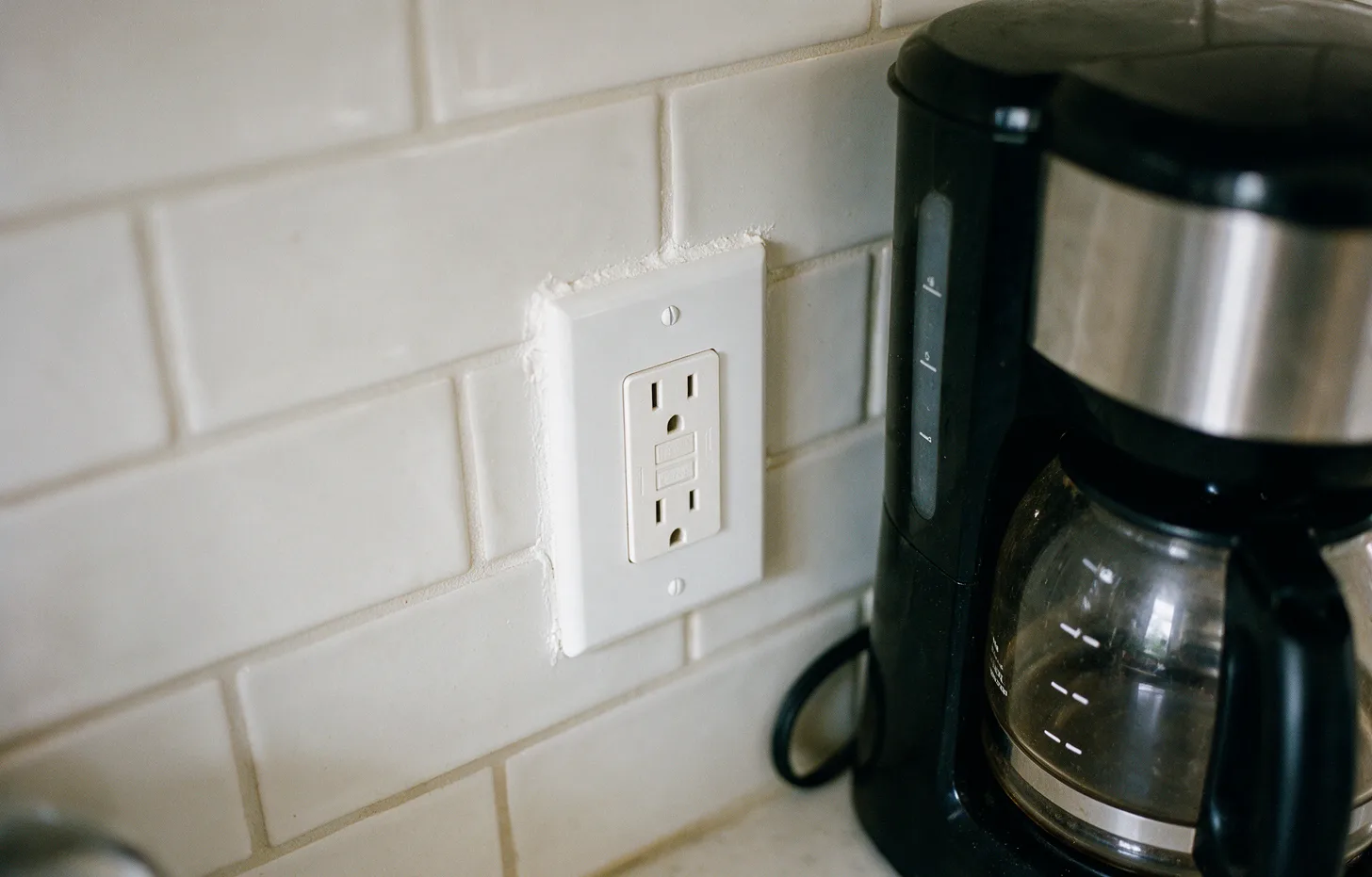
Signs an Outlet Needs Replacement or Addition
- Devices lose power or flicker when moved in the outlet.
- The faceplate feels warm after an hour of normal use.
- Visible scorch marks or melted plastic around the slots.
- Only one outlet works in a duplex that should have two.
- Plugs fall out easily or do not stay seated without tape.
Checks Technicians Perform on Site
Our technicians begin by turning off the breaker and using a non contact voltage tester at the outlet. They remove the cover plate and inspect the wire insulation for cracks or heat damage. Next they verify the box is securely fastened and large enough for the number of conductors present.
They test continuity on the ground wire back to the panel and measure line to neutral voltage under load with a multimeter. If aluminum wiring is present they note the need for CO/ALR rated devices or pigtail connections. All readings are recorded before any new work starts.
Finally they load test the circuit with a plug in tester to confirm it holds the rated amperage without voltage drop beyond acceptable limits.
Common Causes That Require Outlet Work
Repeated overload from high draw appliances such as space heaters or window units trips breakers and overheats terminals. Over time the brass contacts inside the receptacle loosen and create arcing that darkens the slots.
Older homes often have two wire cable without a ground path. Adding a new outlet on these circuits requires running a new grounded cable or installing a GFCI labeled no equipment ground. Nail or screw damage during drywall work can also nick conductors and create intermittent faults.
Water intrusion near sinks or laundry areas corrodes terminals and insulation, leading to failure that only shows when the outlet stops working after a leak.
Materials Used for Outlet Installation
Technicians carry 15 amp and 20 amp duplex receptacles, both tamper resistant and standard. They also stock single pole and three way switches when the job expands to control new lighting. Ground fault circuit interrupter outlets protect locations within six feet of a water source.
For new runs they use 12 gauge or 14 gauge copper NM cable with ground, plastic or metal boxes sized for the conductor count, and cable staples rated for the wire type. Wire connectors, grounding pigtails, and outlet spacers fill the kit so every connection meets code spacing.
USB charging outlets are added when the homeowner wants built in ports without adapters. All devices are chosen to match the existing finish color unless the homeowner requests a change.
What Homeowners Can Do Before Arrival
Locate the breaker that feeds the affected outlet and turn it off. Place a piece of tape over the switch so no one restores power by accident. Clear furniture away from the wall so the technician has room to work and can reach the panel if needed.
Make a list of every device that normally plugs into the area and note any that draw heavy current. This helps the technician decide whether a dedicated circuit should be added at the same time.
Have the age of the home and any recent remodeling notes ready. This information guides whether the existing wiring is copper or aluminum and whether permits apply.
Outlet Installation questions
Can an outlet be added without running new cable?
Sometimes a new outlet can be added by extending from an existing box on the same circuit if the wire gauge and breaker allow the added load. Our technicians calculate the total amperage already on that circuit before deciding.
Why do some outlets need GFCI protection?
Outlets near sinks, tubs, or outdoors must have ground fault protection to shut off power quickly if water creates a path to ground. Technicians install either a GFCI receptacle or a GFCI breaker at the panel depending on wiring layout.
What happens if the outlet box is too small?
A box that lacks cubic inch capacity for the wires and device creates crowding and heat. Technicians replace it with a larger box or add an extension ring before installing the new outlet.
Do USB outlets replace regular ones?
USB outlets can take the place of a standard duplex in many locations. They provide both regular plugs and charging ports while still requiring the same wiring and box preparation as a normal receptacle.
Outlet Installation from Simple Electric
Contact Simple Electric when outlets stop working or new ones are needed in your home.